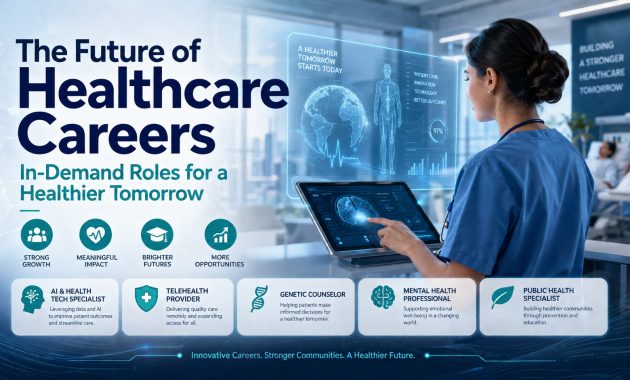
Why Healthcare Careers Are Growing Faster Than Ever
Healthcare has long been one of the world’s most stable industries, but today’s workforce is experiencing unprecedented growth. Aging populations, medical technology breakthroughs, increasing awareness of preventive care, and expanded access to healthcare services are creating thousands of new career opportunities across clinical, technical, administrative, and digital health roles.
Unlike many industries where automation is replacing repetitive work, healthcare continues to rely heavily on human expertise, empathy, critical thinking, and clinical judgment. While artificial intelligence (AI) and automation are transforming healthcare operations, they are enhancing professionals’ capabilities rather than replacing them.
For students, career changers, and experienced professionals, understanding in-demand healthcare jobs can help identify rewarding career paths with excellent job security, competitive salaries, and meaningful opportunities to improve people’s lives.
This guide explores the fastest-growing healthcare careers, the skills employers are seeking, salary expectations, and practical steps to prepare for success in this rapidly evolving industry.
Why Healthcare Careers Have Strong Future Potential
Several long-term trends continue driving demand for healthcare professionals.
An Aging Global Population
As life expectancy increases, more people require ongoing medical care, rehabilitation, chronic disease management, and specialized healthcare services.
Growing Focus on Preventive Care
Healthcare systems increasingly emphasize prevention, wellness, nutrition, and early diagnosis to improve health outcomes and reduce long-term medical costs.
Medical Technology Innovation
AI, robotics, wearable health devices, electronic health records, and telemedicine are creating entirely new healthcare roles while expanding existing ones.
Mental Health Awareness
Growing recognition of mental health challenges has significantly increased demand for psychologists, counselors, therapists, and behavioral health specialists.
Expansion of Telehealth Services
Virtual healthcare appointments continue to improve access to medical services, creating opportunities in digital health, remote patient monitoring, and healthcare technology.
1. Registered Nurse (RN)
Registered nurses remain the foundation of healthcare systems worldwide.
Primary Responsibilities
- Assess patient health
- Administer medications
- Develop care plans
- Monitor patient recovery
- Educate patients and families
- Collaborate with physicians
Average Salary
- United States: Approximately $75,000–$110,000 per year
- United Kingdom: Approximately £28,000–£45,000 per year
- Australia: Approximately AUD 75,000–110,000 per year
Required Skills
- Patient care
- Communication
- Critical thinking
- Compassion
- Clinical decision-making
- Time management
2. Physician Assistant (PA)
Physician assistants work closely with physicians to diagnose illnesses, develop treatment plans, prescribe medications (where permitted), and provide patient care.
Why Demand Is Growing
Healthcare organizations increasingly rely on physician assistants to improve access to quality medical care.
3. Medical Laboratory Scientist
Laboratory professionals analyze blood, tissue, and other biological samples that help physicians diagnose diseases.
Key Skills
- Laboratory techniques
- Attention to detail
- Data analysis
- Quality assurance
- Scientific reasoning
4. Physical Therapist
Physical therapists help patients recover mobility after injuries, surgeries, and chronic conditions.
Typical Responsibilities
- Evaluate movement limitations
- Design rehabilitation programs
- Improve mobility
- Reduce pain
- Prevent future injuries
5. Occupational Therapist
Occupational therapists assist patients in regaining the skills needed for everyday activities following illness, injury, or disability.
6. Mental Health Counselor
Mental health professionals continue experiencing increasing demand due to greater awareness of emotional well-being.
Typical Work Settings
- Hospitals
- Private clinics
- Schools
- Community organizations
- Corporate wellness programs
7. Health Information Manager
Healthcare organizations generate enormous amounts of digital information.
Health information managers oversee:
- Electronic health records
- Data privacy
- Regulatory compliance
- Medical coding
- Information security
8. Healthcare Data Analyst
Data analytics is becoming increasingly important in healthcare decision-making.
Healthcare analysts help organizations:
- Improve patient outcomes
- Optimize hospital operations
- Reduce healthcare costs
- Identify treatment trends
- Support clinical research
9. Telehealth Coordinator
Telemedicine continues expanding worldwide.
Telehealth coordinators manage:
- Virtual appointments
- Patient scheduling
- Technology support
- Digital communication
- Remote healthcare workflows
10. Biomedical Engineer
Biomedical engineers combine engineering principles with healthcare innovation.
They develop:
- Medical devices
- Diagnostic equipment
- Prosthetics
- Imaging systems
- Wearable health technology
11. Pharmacy Technician
As prescription volumes continue growing, pharmacy technicians play an increasingly important role in medication management and patient support.
12. Medical and Health Services Manager
Healthcare managers oversee hospital departments, clinics, healthcare organizations, and administrative operations.
Responsibilities
- Budget planning
- Staff management
- Regulatory compliance
- Strategic planning
- Operational efficiency
Leadership demand continues increasing as healthcare systems expand.
Emerging Healthcare Careers
Technology continues creating exciting new opportunities.
Examples include:
- AI Healthcare Specialist
- Clinical Informatics Specialist
- Digital Health Consultant
- Genomics Technician
- Precision Medicine Coordinator
- Health Technology Project Manager
- Medical Robotics Specialist
- Healthcare Cybersecurity Analyst
These careers combine healthcare knowledge with advanced technology.
Skills Employers Look for in Healthcare Professionals
Technical Skills
- Electronic Health Record (EHR) systems
- Medical terminology
- Healthcare regulations
- Clinical procedures
- Data analysis
- Telemedicine platforms
- AI-assisted healthcare tools
- Infection control
Soft Skills
- Communication
- Emotional intelligence
- Empathy
- Teamwork
- Adaptability
- Problem-solving
- Leadership
- Time management
- Critical thinking
- Cultural competence
Healthcare employers increasingly seek professionals who combine clinical expertise with excellent interpersonal skills.
How to Prepare for a Healthcare Career
Choose the Right Educational Path
Research degree programs, vocational training, or certifications that align with your desired healthcare profession.
Gain Practical Experience
Clinical placements, internships, volunteer work, and shadowing opportunities provide valuable real-world experience.
Develop Digital Healthcare Skills
Become familiar with telehealth systems, electronic health records, AI-assisted diagnostics, and healthcare software.
Earn Professional Certifications
Industry-recognized certifications can improve employability and demonstrate specialized expertise.
Stay Current with Medical Advances
Healthcare evolves rapidly. Read journals, attend conferences, and participate in continuing education programs.
Benefits of Working in Healthcare
Excellent Job Security
Healthcare remains one of the most resilient industries due to consistent demand for medical services.
Meaningful Work
Many healthcare professionals find fulfillment in helping patients improve their health and quality of life.
Competitive Salaries
Many healthcare careers offer attractive compensation, benefits, and opportunities for advancement.
Career Flexibility
Healthcare professionals can work in hospitals, clinics, research centers, government agencies, nonprofit organizations, educational institutions, and private practice.
Continuous Learning
Medical advances create ongoing opportunities for specialization and professional growth.
Common Challenges in Healthcare Careers
While healthcare offers many rewards, professionals should also prepare for challenges such as:
- Physically demanding work
- Emotional stress
- Shift schedules
- Regulatory requirements
- Continuous education
- High levels of responsibility
Strong resilience and effective stress management contribute to long-term career success.
FAQs – In-Demand Healthcare Jobs
What are the most in-demand healthcare jobs in 2026?
Registered nurses, physician assistants, physical therapists, healthcare data analysts, mental health counselors, biomedical engineers, medical laboratory scientists, and healthcare managers are among the fastest-growing roles.
Why is demand for healthcare professionals increasing?
Population aging, medical technology advancements, chronic disease management, mental health awareness, and expanded access to healthcare services are driving long-term demand.
Which healthcare careers offer the highest salaries?
Physicians, physician assistants, healthcare executives, specialized nurses, biomedical engineers, and healthcare administrators often earn some of the highest salaries in the industry.
Is healthcare a good career for long-term job security?
Yes. Healthcare is widely regarded as one of the most stable industries due to ongoing demand for medical services.
How is AI changing healthcare careers?
AI supports professionals by assisting with diagnostics, administrative tasks, medical imaging, and data analysis while creating new opportunities in digital health and clinical informatics.
Can I work in healthcare without becoming a doctor?
Absolutely. The industry offers hundreds of rewarding careers in nursing, therapy, diagnostics, administration, technology, research, and allied health professions.
What soft skills are most important in healthcare?
Communication, empathy, teamwork, adaptability, emotional intelligence, and critical thinking are essential across nearly all healthcare roles.
Are telehealth careers expected to grow?
Yes. Virtual healthcare services continue expanding, increasing demand for professionals who support digital healthcare delivery.
What education is required for healthcare careers?
Requirements vary by profession. Some roles require certificates or associate degrees, while others require bachelor’s, master’s, or doctoral degrees along with professional licensing.
Which healthcare jobs combine technology and medicine?
Biomedical engineering, health informatics, healthcare data analytics, telehealth coordination, clinical informatics, and AI healthcare development are excellent examples.
Can I transition into healthcare from another industry?
Yes. Many administrative, technology, project management, finance, and customer service professionals successfully transition into healthcare after acquiring relevant qualifications.
How can I prepare for a healthcare career today?
Choose an appropriate educational path, gain practical experience, develop digital healthcare skills, earn certifications, and stay informed about medical innovations.
Final Verdict
The demand for in-demand healthcare jobs is expected to remain strong throughout 2026 and beyond, making healthcare one of the most promising industries for long-term career growth. Advances in medical technology, telehealth, AI, and preventive care are creating exciting opportunities across clinical, technical, and administrative roles, while the need for compassionate, skilled professionals continues to rise.
Whether your passion lies in direct patient care, healthcare technology, research, or leadership, there are numerous pathways to build a meaningful and stable career. By investing in the right education, continuously updating your skills, and embracing innovation, you can position yourself for success in one of the world’s most essential and rewarding industries.

Experienced Recruiter with a demonstrated history of working in the media production industry. Strong human resources professional with a Bachelor’s degree focused in Psychology from Universitas Kristen Satya Wacana.