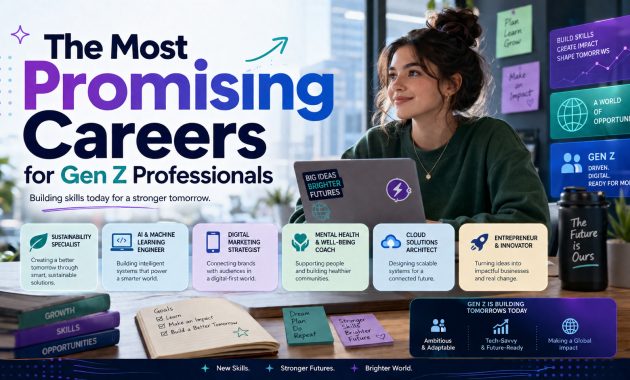
Why Gen Z Is Entering a Different Job Market
Generation Z—generally those born between the late 1990s and early 2010s—is entering the workforce during one of the most transformative periods in history. Artificial intelligence (AI), automation, remote work, sustainability, and digital innovation are reshaping industries faster than ever before. Unlike previous generations, Gen Z professionals are beginning their careers in a world where adaptability, continuous learning, and digital fluency are just as valuable as formal education.
Today’s employers are looking for professionals who can embrace new technologies, collaborate across virtual teams, solve complex problems, and learn quickly. At the same time, many Gen Z workers prioritize meaningful work, flexibility, career development, and work-life balance alongside competitive salaries.
If you’re planning your career or considering a career change, understanding the best careers for Gen Z can help you choose a profession that offers long-term stability, excellent earning potential, and opportunities for growth.
What Makes a Career Ideal for Gen Z?
The most promising careers share several important characteristics.
Strong Long-Term Demand
Future-proof careers continue growing despite economic changes and technological disruption.
Competitive Salaries
High-growth industries often offer above-average earning potential and attractive benefits.
Opportunities for Continuous Learning
Technology evolves rapidly, making ongoing professional development essential.
Flexible Work Options
Many modern careers provide hybrid or fully remote opportunities.
Purpose and Meaning
Many Gen Z professionals seek careers where they can make a positive impact on businesses, communities, or society.
Top Careers for Gen Z Professionals
1. Artificial Intelligence (AI) Specialist
Artificial intelligence is transforming nearly every industry, creating enormous demand for professionals who can develop, implement, and manage AI-powered solutions.
Typical Roles
- AI Engineer
- Machine Learning Engineer
- AI Consultant
- Prompt Engineer
- AI Product Manager
Average Salary
- United States: Approximately $100,000–$180,000 per year
- United Kingdom: Approximately £55,000–£95,000 per year
- Australia: Approximately AUD 100,000–170,000 per year
Required Skills
- Python
- Machine Learning
- Data Analysis
- Cloud Computing
- Critical Thinking
2. Cybersecurity Specialist
Cybersecurity remains one of the fastest-growing career fields as organizations strengthen their digital defenses.
Popular Positions
- Security Analyst
- Ethical Hacker
- Cloud Security Engineer
- Security Consultant
- Incident Response Analyst
Why It’s Promising
Every industry requires cybersecurity professionals, making this career highly resilient.
3. Software Developer
Software developers continue building the applications, websites, and systems that power modern businesses.
Key Skills
- Programming
- Software Architecture
- Cloud Technologies
- APIs
- Problem-Solving
Remote work opportunities remain abundant in software development.
4. Data Analyst and Data Scientist
Data drives business decisions across nearly every industry.
Professionals in these roles help organizations:
- Analyze trends
- Improve operations
- Forecast demand
- Support strategic planning
- Identify business opportunities
5. Digital Marketing Specialist
As businesses continue expanding online, digital marketing professionals remain in high demand.
Career Paths
- SEO Specialist
- Content Strategist
- PPC Manager
- Social Media Manager
- Marketing Automation Specialist
6. UX/UI Designer
User experience continues influencing customer satisfaction and business success.
UX/UI professionals create digital products that are intuitive, accessible, and engaging.
7. Healthcare Professional
Healthcare continues expanding due to aging populations and advances in medical technology.
Growing careers include:
- Registered Nurse
- Physical Therapist
- Occupational Therapist
- Healthcare Data Analyst
- Telehealth Coordinator
Healthcare offers strong job security and meaningful work.
8. Renewable Energy Engineer
The global transition toward sustainable energy continues creating exciting career opportunities.
Potential roles include:
- Solar Engineer
- Wind Energy Specialist
- Sustainability Consultant
- Environmental Engineer
9. Financial Technology (FinTech) Specialist
Technology continues transforming banking and financial services.
Career options include:
- FinTech Product Manager
- Financial Analyst
- Blockchain Developer
- Digital Payments Specialist
10. Product Manager
Product managers coordinate teams responsible for developing successful products and services.
They combine:
- Business strategy
- Customer insights
- Technology
- Leadership
- Project management
11. Cloud Computing Engineer
Cloud infrastructure supports modern businesses worldwide.
Growing roles include:
- Cloud Engineer
- Cloud Architect
- DevOps Engineer
- Infrastructure Engineer
Cloud expertise remains one of the most valuable technical skills.
12. Content Creator and Professional Blogger
The creator economy continues growing through:
- Blogging
- YouTube
- Podcasting
- Online education
- Affiliate marketing
- Digital products
Professionals who combine creativity with business strategy can build successful independent careers.
13. Human Resources and Talent Acquisition Specialist
Modern HR professionals play an increasingly strategic role.
Growing responsibilities include:
- Workforce planning
- Employee engagement
- Employer branding
- Diversity initiatives
- AI-assisted recruitment
14. Business Analyst
Business analysts help organizations improve efficiency by evaluating processes and recommending strategic solutions.
These professionals bridge communication between technical teams and business leaders.
15. Sustainability and ESG Specialist
Environmental, Social, and Governance (ESG) initiatives continue expanding across industries.
Organizations increasingly hire professionals to:
- Develop sustainability strategies
- Measure environmental impact
- Improve corporate responsibility
- Prepare ESG reports
Fastest-Growing Industries for Gen Z
Several industries are expected to experience significant hiring growth throughout 2026 and beyond.
Technology
- Artificial Intelligence
- Cloud Computing
- Software Development
- Cybersecurity
Healthcare
- Nursing
- Telemedicine
- Medical Technology
- Mental Health Services
Finance
- FinTech
- Digital Banking
- Financial Analytics
Green Economy
- Renewable Energy
- Sustainability Consulting
- Environmental Engineering
Digital Business
- E-commerce
- Digital Marketing
- Creator Economy
- Online Education
Skills Every Gen Z Professional Should Develop
Technical Skills
- Artificial Intelligence literacy
- Data Analytics
- Cloud Computing
- Cybersecurity awareness
- Digital Marketing
- Project Management Software
- Automation Tools
Professional Skills
- Communication
- Emotional Intelligence
- Critical Thinking
- Leadership
- Adaptability
- Collaboration
- Creativity
- Time Management
- Problem-Solving
- Decision-Making
Employers increasingly seek professionals who combine technical expertise with excellent interpersonal skills.
How Gen Z Can Prepare for Future Careers
Commit to Lifelong Learning
Technology changes rapidly. Continue developing your knowledge through online courses, certifications, workshops, and professional communities.
Build Practical Experience Early
Internships, freelance work, volunteer opportunities, hackathons, and personal projects strengthen your résumé before graduation.
Develop a Professional Online Presence
Maintain an updated LinkedIn profile, build a portfolio, and share projects that demonstrate your skills.
Learn to Work with AI
Understanding AI tools and how to use them responsibly will become valuable across nearly every profession.
Strengthen Transferable Skills
Communication, teamwork, adaptability, and leadership remain essential regardless of your career path.
Common Career Mistakes Gen Z Should Avoid
Choosing Salary Over Long-Term Growth
A high starting salary is attractive, but career progression, learning opportunities, and job satisfaction are equally important.
Ignoring Soft Skills
Technical expertise alone isn’t enough. Strong communication and collaboration skills often distinguish top performers.
Resisting New Technology
Professionals who embrace emerging technologies adapt more quickly to changing workplace demands.
Waiting Too Long to Build Experience
Real-world experience gained through internships, freelance work, or side projects can significantly improve employability.
FAQs – Best Careers for Gen Z
What are the best careers for Gen Z in 2026?
Artificial intelligence, cybersecurity, software development, healthcare, cloud computing, renewable energy, digital marketing, UX/UI design, FinTech, and data analytics are among the most promising career paths.
Which careers offer the highest salaries for Gen Z?
AI engineers, cloud architects, cybersecurity specialists, software developers, physician assistants, product managers, and data scientists often earn some of the highest salaries.
Do I need a college degree for these careers?
Not always. Many employers also value certifications, portfolios, practical experience, and demonstrated skills alongside formal education.
Is AI replacing entry-level jobs?
AI is automating some routine tasks, but it is also creating new opportunities. Professionals who learn to work alongside AI are likely to remain competitive.
Which careers offer remote work opportunities?
Technology, digital marketing, content creation, consulting, project management, customer support, and data analysis frequently offer remote or hybrid positions.
How important are soft skills for Gen Z?
Very important. Communication, adaptability, leadership, and emotional intelligence remain essential for career growth.
What industries are expected to grow the fastest?
Healthcare, artificial intelligence, cybersecurity, renewable energy, cloud computing, and digital services are projected to experience strong long-term growth.
Can freelancing be a full-time career?
Yes. Many Gen Z professionals build successful freelance businesses in writing, design, software development, consulting, and digital marketing.
What is the best way to gain experience before graduation?
Internships, volunteer work, freelance projects, campus organizations, competitions, and personal portfolios provide valuable practical experience.
How can I future-proof my career?
Invest in continuous learning, develop technical and soft skills, stay informed about industry trends, and embrace new technologies.
Should Gen Z focus on specialization or broad skills?
Start by building broad foundational knowledge, then specialize in an area with strong market demand while continuing to expand complementary skills.
What is the biggest advantage Gen Z has in today’s job market?
Digital fluency, adaptability, familiarity with emerging technologies, and a willingness to embrace continuous learning position many Gen Z professionals for long-term success.
Final Verdict
The best careers for Gen Z are those that combine long-term growth, competitive salaries, meaningful work, and opportunities to develop alongside emerging technologies. Fields such as artificial intelligence, cybersecurity, healthcare, cloud computing, renewable energy, digital marketing, and data analytics are expected to remain in high demand well beyond 2026.
However, choosing the right career is only the beginning. Success in the modern workforce requires continuous learning, adaptability, and a balance of technical expertise and human-centered skills. By building practical experience, embracing AI as a productivity tool, and investing in lifelong professional development, Gen Z professionals can create resilient careers that thrive in an ever-changing global economy.

Experienced Recruiter with a demonstrated history of working in the media production industry. Strong human resources professional with a Bachelor’s degree focused in Psychology from Universitas Kristen Satya Wacana.