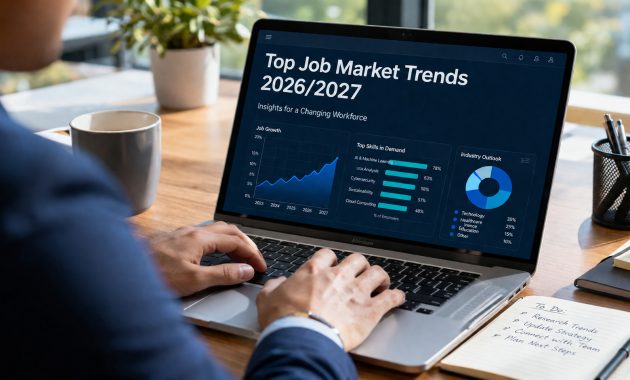
The Workplace Is Evolving Faster Than Ever
The global job market is entering a new era. Advances in artificial intelligence, digital transformation, demographic shifts, and changing employee expectations are reshaping how organizations hire, manage talent, and define success. Careers that were highly sought after just a few years ago are evolving, while entirely new roles continue to emerge.
Understanding the latest job market trends isn’t just helpful—it’s essential for anyone planning a career move, entering the workforce, or preparing for leadership opportunities. Professionals who anticipate change and develop future-ready skills will be better positioned to thrive in 2026, 2027, and beyond.
This guide explores the most significant job market trends expected to influence hiring, workplace culture, and career development over the next two years.
Why Following Job Market Trends Is Important
The employment landscape changes continuously. Staying informed helps you:
- Make smarter career decisions
- Focus on in-demand skills
- Prepare for emerging industries
- Improve long-term job security
- Stay competitive during recruitment
- Identify new career opportunities before they become mainstream
Professionals who adapt early often gain a significant advantage over those who react after changes occur.
1. Artificial Intelligence Will Become a Standard Workplace Tool
Artificial intelligence is no longer limited to technology companies. Organizations across healthcare, finance, education, manufacturing, retail, and marketing are integrating AI into everyday operations.
Rather than replacing every employee, AI is increasingly being used to:
- Automate repetitive administrative work
- Analyze large datasets
- Improve customer service
- Assist with content creation
- Support decision-making
- Increase operational efficiency
Professionals who understand how to work alongside AI tools will become increasingly valuable.
2. Skills-Based Hiring Will Continue to Replace Degree-Only Requirements
Employers are placing greater emphasis on practical abilities instead of relying solely on formal education.
Recruiters increasingly evaluate candidates based on:
- Demonstrated skills
- Professional certifications
- Portfolios
- Work experience
- Industry projects
- Technical assessments
This trend creates more opportunities for self-taught professionals, career changers, and individuals who invest in continuous learning.
3. Continuous Learning Will Become a Career Requirement
The concept of learning once and working for decades with the same skills is becoming outdated.
Successful professionals will regularly update their knowledge through:
- Online courses
- Professional certifications
- Industry conferences
- Workshops
- Employer-sponsored training
- Independent study
Lifelong learning will become one of the strongest predictors of career success.
4. Hybrid Work Will Become the Preferred Model
Although some organizations have returned to the office, many continue adopting hybrid work arrangements.
Benefits include:
- Improved work-life balance
- Higher employee satisfaction
- Access to broader talent pools
- Reduced commuting time
- Increased workplace flexibility
Professionals who communicate effectively across both virtual and in-person environments will remain highly competitive.
5. Demand for Digital Skills Will Continue Growing
Digital transformation affects nearly every profession.
Increasingly valuable skills include:
- Data analysis
- Cloud computing
- Cybersecurity
- Digital marketing
- Automation
- AI literacy
- Business intelligence
- Project management software
Even non-technical roles now benefit from a strong digital foundation.
6. Soft Skills Will Become Even More Valuable
While technology continues advancing, human skills remain difficult to automate.
The most sought-after soft skills include:
- Communication
- Leadership
- Emotional intelligence
- Adaptability
- Critical thinking
- Creativity
- Collaboration
- Problem-solving
Organizations increasingly look for professionals who combine technical expertise with interpersonal excellence.
7. Green Jobs and Sustainability Careers Will Expand
Governments and businesses continue investing in sustainability initiatives.
Growing sectors include:
- Renewable energy
- Environmental engineering
- Sustainable construction
- ESG reporting
- Carbon management
- Electric vehicle technology
- Circular economy consulting
Professionals with environmental knowledge are expected to see increasing opportunities.
8. Cybersecurity Will Remain a High-Priority Field
As businesses become more digital, cyber threats continue to grow.
Organizations need professionals specializing in:
- Network security
- Ethical hacking
- Digital risk management
- Cloud security
- Incident response
- Information security compliance
Cybersecurity demand is expected to remain strong across industries.
9. Healthcare Careers Will Continue Growing
Aging populations and advances in healthcare technology are increasing demand for healthcare professionals.
Growth areas include:
- Nursing
- Medical technology
- Mental health services
- Telehealth
- Healthcare administration
- Biomedical research
- Rehabilitation services
Healthcare remains one of the most resilient employment sectors.
10. Employers Will Prioritize Employee Well-Being
Organizations increasingly recognize that employee well-being directly impacts productivity and retention.
Common workplace initiatives include:
- Flexible scheduling
- Mental health support
- Wellness programs
- Professional development opportunities
- Inclusive workplace policies
- Better work-life balance
Companies with strong employee experiences often attract and retain top talent.
11. Freelancing and Portfolio Careers Will Continue to Grow
Many professionals are choosing flexible career paths instead of traditional full-time employment.
Popular freelance fields include:
- Graphic design
- Software development
- Copywriting
- Digital marketing
- Consulting
- Video production
- Virtual assistance
Building multiple income streams is becoming more common across industries.
12. Leadership Expectations Are Changing
Modern leaders are expected to do more than manage performance.
Future leaders need to:
- Coach employees
- Support innovation
- Lead diverse teams
- Navigate organizational change
- Foster collaboration
- Make data-informed decisions
- Encourage continuous learning
Leadership is becoming increasingly people-focused rather than authority-driven.
Most In-Demand Skills for 2026/2027
Technical Skills
- Artificial Intelligence literacy
- Data analytics
- Cybersecurity
- Cloud computing
- Automation tools
- Digital marketing
- UX/UI fundamentals
- Project management software
Professional Skills
- Communication
- Critical thinking
- Emotional intelligence
- Time management
- Leadership
- Adaptability
- Creativity
- Collaboration
- Negotiation
- Decision-making
How to Prepare for Future Job Market Trends
Invest in Continuous Learning
Regularly update your knowledge through online courses, certifications, webinars, and professional development programs.
Develop Transferable Skills
Focus on skills that remain valuable across industries, such as communication, leadership, and analytical thinking.
Strengthen Your Digital Competencies
Become comfortable using productivity software, AI-powered tools, data visualization platforms, and collaboration technologies.
Build a Professional Network
Networking exposes you to new opportunities, emerging industries, and career advice from experienced professionals.
Stay Curious About Industry Changes
Follow industry publications, thought leaders, and market reports to understand where your profession is heading.
Create a Flexible Career Plan
Instead of planning for a single job title, prepare for multiple career possibilities by developing versatile skills.
FAQs
What are job market trends?
Job market trends are changes in hiring practices, workplace expectations, in-demand skills, and employment opportunities that influence career prospects.
Why should professionals follow job market trends?
Understanding trends helps individuals prepare for future opportunities, develop relevant skills, and remain competitive.
Will AI eliminate most jobs by 2027?
AI will automate some tasks, but it is also expected to create new roles and increase demand for professionals with complementary skills.
Which industries are expected to grow the fastest?
Healthcare, cybersecurity, renewable energy, artificial intelligence, data analytics, and advanced manufacturing are expected to experience strong growth.
Are college degrees still important?
Yes, but employers are increasingly considering practical skills, certifications, portfolios, and experience alongside formal education.
What soft skills will employers value most?
Communication, adaptability, emotional intelligence, leadership, creativity, and problem-solving will remain highly sought after.
Is remote work expected to continue?
Yes. While fully remote roles may vary by industry, hybrid work models are expected to remain common.
How can I prepare for future job market changes?
Focus on continuous learning, digital literacy, networking, and developing transferable skills.
What is skills-based hiring?
Skills-based hiring evaluates candidates primarily on their abilities and demonstrated competencies rather than academic qualifications alone.
Are freelance careers becoming more popular?
Yes. More professionals are choosing freelance, consulting, and portfolio careers for greater flexibility and diversified income.
Which technical skills are becoming essential?
AI literacy, cybersecurity, cloud computing, data analytics, automation, and digital collaboration tools are increasingly valuable.
What is the biggest job market trend for 2026/2027?
The growing integration of AI alongside continuous learning and skills-based hiring is expected to have the greatest impact on the future workforce.
Final Verdict
The job market trends shaping 2026 and 2027 point toward a workforce that values adaptability, digital fluency, and continuous learning more than ever before. While technological advancements—particularly AI—will continue transforming industries, uniquely human abilities such as creativity, emotional intelligence, leadership, and critical thinking will remain indispensable.
Professionals who embrace lifelong learning, strengthen both technical and interpersonal skills, and remain open to change will be well-equipped to seize emerging opportunities. Instead of fearing the future of work, use these trends as a roadmap to build a resilient, future-ready career that can thrive in an increasingly dynamic global economy.

Experienced Recruiter with a demonstrated history of working in the media production industry. Strong human resources professional with a Bachelor’s degree focused in Psychology from Universitas Kristen Satya Wacana.